Case Study · Amprion
Ahorn: Smart decisions – data-driven, human-centred.
Successful digital transformations rest on more than technology – they are driven by the synergy of structured data, innovative tools and the vision, strategy and determination of forward-looking leaders.
Customer
Amprion
Industry
Energy
Country
Germany
Use case
Decision support
Structr use case
Amprion
Successful digital transformations depend not only on technology but also on visionaries, strategists and determined leaders who actively drive change. In the end, it is people who play the decisive role in making a difference.
Every day we make up to 20,000 decisions, ranging from trivial to life-changing. Strategic business decisions in particular can lead to significant change. At a time of rapidly growing data volumes and complexity, many companies struggle to use information effectively and to foster a data-driven decision culture. An IDC study shows that 70% of modernisation initiatives fail because the focus is too much on technology and not on building a strong decision culture.
The Harvard Business Review points out that the key to success in digital transformation lies not only in technology but also in the right approach and in fostering a human-centred decision culture. Structuring tools can be invaluable in this process, as they present options clearly, help to weigh criteria and make analysis easier. However, these tools cannot replace the essential role of intuition, emotion and experience.
Read more.
It is therefore crucial that these technologies enhance human judgement rather than replace it. A human-centred approach, in which people are the decisive link between problems and solutions, is indispensable. The Ahorn tool developed by Amprion and Structr is an example of how technology and human judgement can be seamlessly integrated to support effective decision-making.
With Ahorn, Structr and Amprion have developed a tool that combines agility and speed in a web-based graph approach. The solution is the result of close collaboration between both teams. Structr's capabilities and the Structr team's ability to understand the complex challenges and the TAM methodology and to implement them right away were decisive for the progress and success of the project.
Key highlights
- Optimised decisions integrate intuition and data
- Dynamic data management simplifies complexity
- Future-proof solution scales and adapts
- The challenge: managing multidimensional, complex, evolving data for well-founded decision-making
- Solution: Ahorn integrates the TAM methodology with dynamic graph-based technology
- Benefit: transparent, scalable and efficient decision support
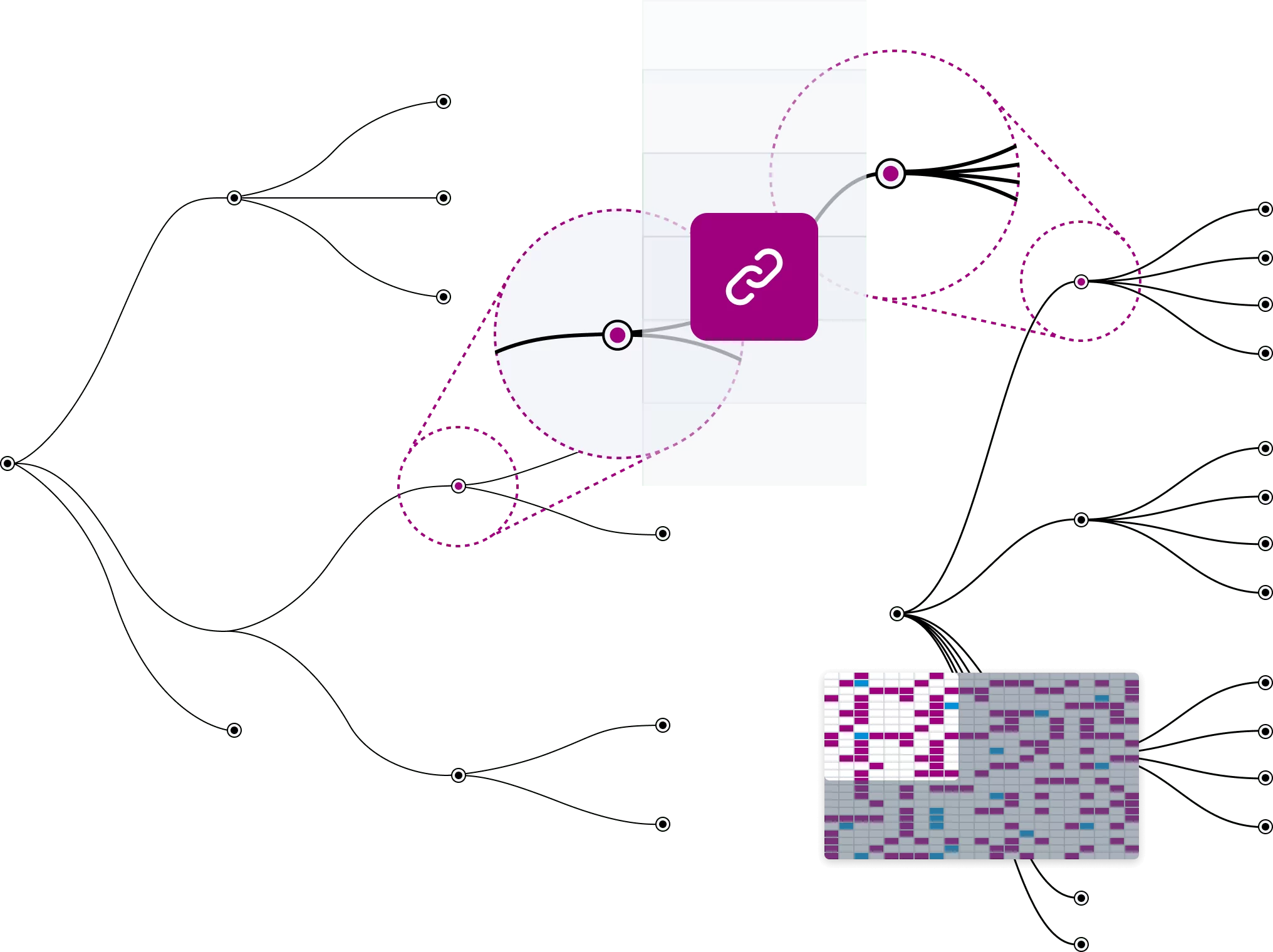
Near and far: a structured overview of the individual elements makes the impact of decisions clearer, while keeping the flexibility to adjust and refine the understanding as connections between these elements emerge.
Key highlights
Balancing data complexity and ease of use
Seamless integration of different perspectives
Ensuring scalability and adaptability
The structuring tool Ahorn
Before decisions are made, it is important to analyse the situation thoroughly, filter out irrelevant information and define clear options for action. Decisions are often influenced by unsuitable questions or incomplete data that do not meet the specific requirements. In a dynamic environment, it is essential to constantly reassess and adapt our perspectives and the underlying data.
Databases offer a wealth of information, but they often lack specific focus and the crucial implicit knowledge that is based on personal experience and intuition and is indispensable for well-founded decisions.
Read more.
Ahorn addresses this challenge by encouraging employees to actively contribute their knowledge and identify key information. Ahorn brings this implicit knowledge to the surface and includes it in the decision-making process to support well-founded decisions. The speed and flexibility of Structr allow relevant characteristics to be implemented digitally and adapted dynamically based on the criteria analysed by the employees, especially when questions or criteria evolve through feedback loops.
As a tool, Ahorn is ideal for bringing order and agility to data structures. This approach offers comprehensive advantages that are essential in today's business environment:
-
Transparent know-how
Knowledge is captured systematically and made accessible to everyone involved.
-
Clear relationships
The connections between data points are shown clearly, making the relationships easier to understand.
-
Solid basis for decisions
A solid basis for decisions is created, which strengthens decision-making competence.
-
Visible decision options
Different options for action are made visible, which makes a well-founded decision easier.
-
Less redundancy
Redundant information is eliminated efficiently.
-
A common language
A consistent terminology improves understanding and communication within the team.
-
Critical aspects identified
Problem areas are uncovered and can be tackled directly.
Identifying the right attributes for decision-making: TAM
Before gathering information, evaluating alternatives and making a final decision, it is important to reach a consensus on the relevant question. Which information is relevant and should be integrated into the decision-making process – and therefore into Ahorn – is determined with the TAM method (Tree Attribute Matrix). This process involves all team members.
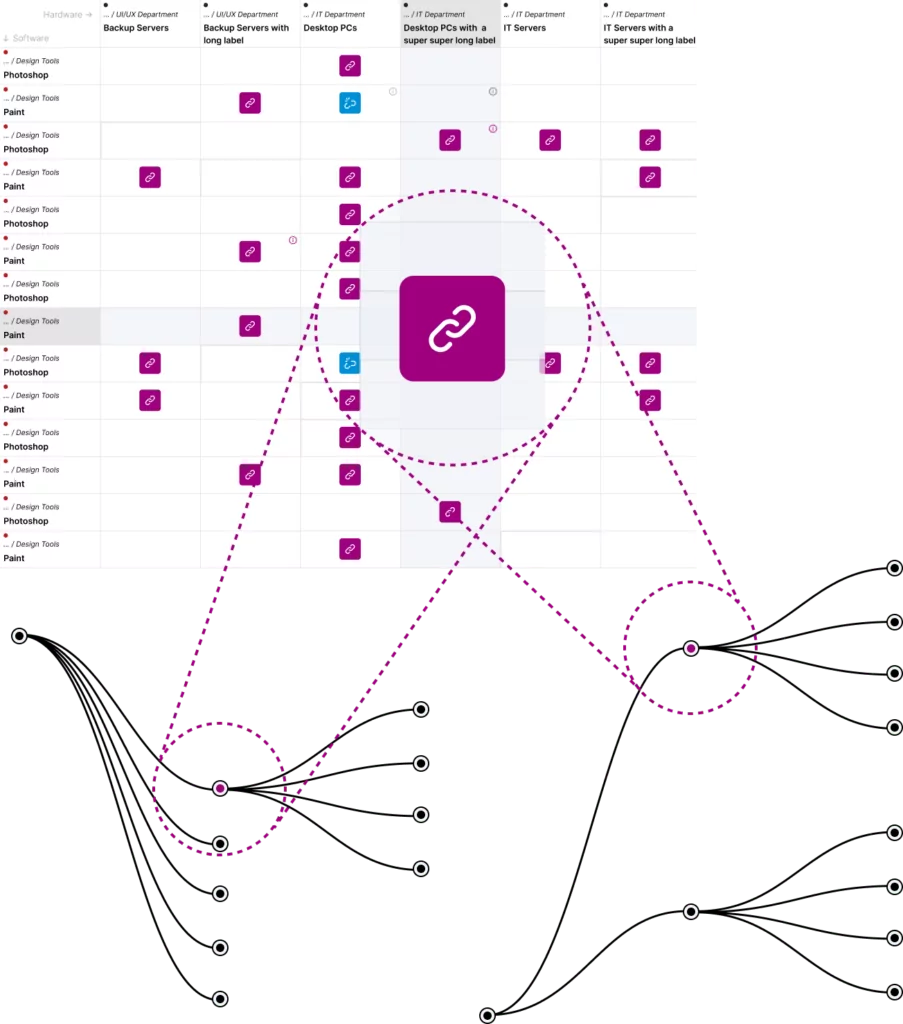
TAM reflects all elements in Ahorn through attribute-based links. Combining TAM and Ahorn in the decision-making process is highly efficient.
The TAM methodology: ideal for a graph-based implementation
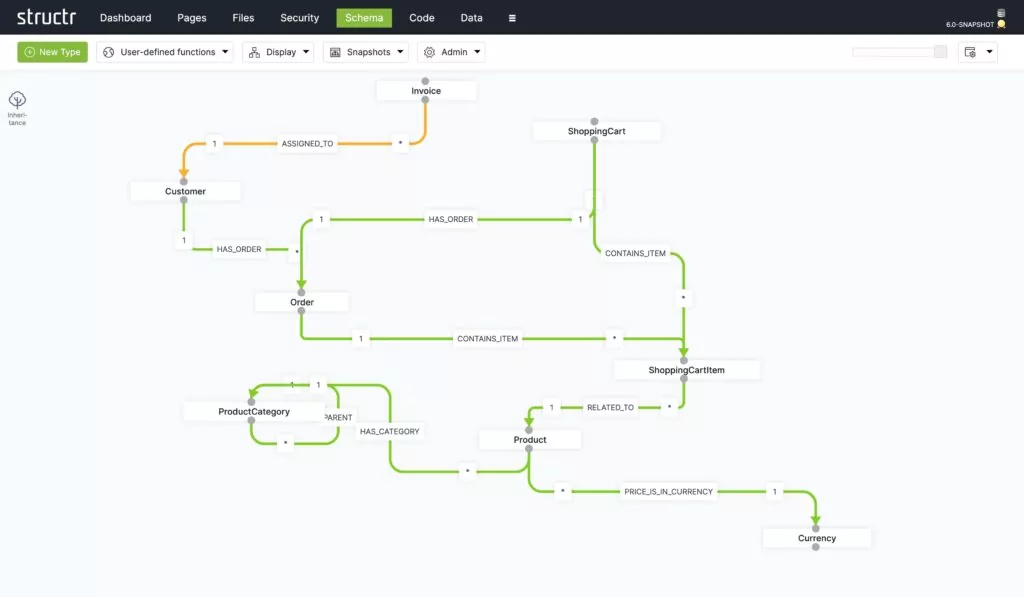
The TAM methodology is essentially based on a graph structure – consisting of tree, attribute and matrix – and is therefore ideally suited to being represented in this framework. Structr provides all the tools needed to build the required data model and the corresponding application logic efficiently. These tools include the schema editor, used to develop the technical data model, and low-code functions that make it possible to implement all of Ahorn's functionality, including versioning, history, customisable attribute-value pairs and a user-friendly interface with graph visualisation and matrix views.
Implementing the TAM methodology with Structr was the obvious choice, because Structr supports graph technology natively and can therefore represent multidimensional relationships directly – without having to translate TAM data into relational or other formats.
By multidimensionality we mean the interweaving of several trees, which makes it possible to identify indirect or implicit relationships.
Tools
The Structr platform offers a range of tools that are optimised for use cases like Ahorn. They support multidimensional data models, streamline the development of business logic and integrate sophisticated user interfaces.
-
Schema editor
The Ahorn-specific metadata model was created with low-code in the schema editor.
-
Code editor
The backend business logic was integrated in the code editor, using a combination of low-code and pro-code.
-
Page editor
The frontend with the graph visualisation was built with HTML, JavaScript and CSS in the page editor.
Reality can be paradoxical and contradictory. In many cases, this gets in the way of an organisation running smoothly. Structr's graph approach allowed us to represent ambiguities and paradoxes in Ahorn's data model in a systematic and simple way. At an early stage of development, the Structr team had already created a data model for Ahorn that later proved to be very stable as we added more and more functionality to the tool. Our implementation on the Structr platform moved quickly from the start, because we were able to focus on the tool's functionality and usability.
Ahorn's key benefits
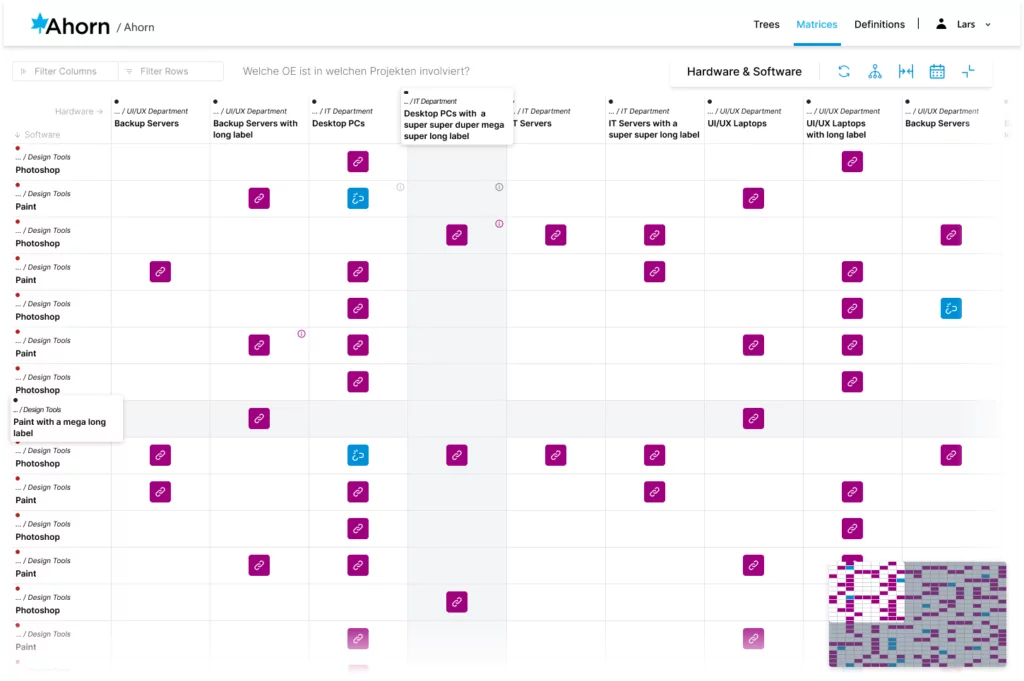
A simple, user-friendly interface that makes applying the TAM method easier
The ability to uncover indirect or implicit relationships across several trees that might otherwise go unnoticed
The ability to bring order to extremely complex data structures
Makes it possible to explore different business scenarios hypothetically for well-founded decision-making
Outlook
In summary, Ahorn and Structr strengthen decision-making processes by providing an agile and robust foundation that helps companies succeed in a data-driven world. Ahorn stands out especially where other systems reach their limits: it offers a user-friendly “what-if model” that makes it possible to simulate different scenarios and their outcomes, allowing direct and risk-free comparisons. In future, Ahorn can be optimised further through extensions to versioning and history.
This would allow decision-makers to test different strategies in a low-risk environment by simulating and analysing different business scenarios without affecting the existing data sets. In addition, improved history tracking would enable a deeper analysis of data from different periods, making it easier not only to evaluate past performance but also to produce well-founded forecasts for future developments. These functions extend what decision-makers can do by combining human intuition and experience with precise data analysis.
Read more.
A repository for sharing data trees is also planned, which will allow users to share trees with other users across different Ahorn instances. This will reduce the effort of duplicating data entries that are relevant to different users in the organisation.
With these developments, Ahorn will become an even more powerful tool for strategic planning and for adapting to dynamic market conditions – one that effectively balances both the technological and the human aspects of the decision-making process.
The “Why not just use Excel?” effect: a common misconception when applying Ahorn and complementary methods
In projects where Ahorn and its associated methods are used from the start, a phenomenon known as the “Why not just use Excel?” effect often occurs. This effect can be traced back to two key factors:
- At the start of a project, complexity is usually still manageable, so the structures appear simple.
- Applying structured methods from the start creates a clear and well-organised framework that, at first glance, looks as though it could just as well be handled in Excel.
This leads to a fundamental misconception: many people do not see the need to use complementary methods and tools because everything seems simple and manageable. What is often overlooked, however, is that this simplicity is the result of deliberately applying these methods. The value of complementary approaches is frequently underestimated because there is a lack of understanding of why they are needed, especially at a high level of granularity. If the importance of a well-thought-out architecture is not clear, one might wonder why one should take the time to consider it instead of jumping straight to a simple solution to get quick results.
This effect underlines how important it is to raise awareness of the long-term benefits of structured methods, even if they may seem unnecessarily complex in the early stages of a project. Understanding and appreciating these methods can prevent processes from being oversimplified and ensure that the project can scale effectively as complexity grows.
Experience it
In a world where data is the basis for business decisions, choosing the right tool is crucial. Ahorn sets new standards and surpasses traditional spreadsheet programs such as Excel in many respects. Ahorn's unique advantage lies in its ability to manage complex, multidimensional data structures efficiently and to visualise them clearly. While Excel is well suited to simple tables and basic data analysis, it quickly reaches its limits as complexity grows. Ahorn, by contrast, with its native support for graph structures, opens up entirely new ways of presenting complex relationships and dependencies between data clearly.
One of Ahorn's greatest strengths is its built-in versioning and history – functions that Excel does not offer. They allow users to simulate scenarios flexibly and make well-founded decisions based on dynamic data models. Ahorn shows its strength particularly with highly granular data and complex dependencies – with a depth and flexibility that clearly surpass Excel.
Another key advantage is the long-term saving of resources. Ahorn reduces the need for redundant data entry and the inefficient workflows that often occur when using Excel. Through its native support for complex data structures and the seamless integration of complementary methods, Ahorn helps its customers optimise their data strategy and adapt better to dynamic market conditions.
Ultimately, Ahorn enables companies to increase their competitiveness sustainably. By providing a solid foundation for growth and innovation, Ahorn ensures that companies can not only respond to current challenges but also be successful in the long term. Ahorn is more than just a tool – it is the key to a future-proof data strategy.
Ahorn enables structured, scalable data management that provides clarity even as complexity grows. It increases our agility by allowing us to adapt quickly to change and to simulate scenarios without risk, which supports precise and well-founded decision-making.
About Amprion
Amprion GmbH is one of four transmission system operators in Germany. Its 11,000-kilometre high-voltage grid transports electricity in a region that stretches from the North Sea to the Alps and generates a third of Germany's economic output. Our transmission lines are the lifelines of society, securing jobs and quality of life for 29 million people.
We ensure a stable and secure grid, and by expanding our network we are paving the way for a climate-neutral energy system. Around 2,300 employees in Dortmund and at more than 30 other locations make sure the lights always stay on. In addition, Amprion takes on overarching responsibility for the interconnected grids in Germany and Europe.
Would you like to learn more about how Structr was used in this solution?
Feel free to contact us at any time on +49 800 / 78 78 287 or send us an email at contact@structr.com. Alternatively, use our contact form.

Lukas Reich
Thank you for your message
We have received your request and will get back to you within one business day.
Urgent? Call us at +49 800 / 78 78 287.
Oops, something went wrong
Your message could not be sent. Please try again in a moment.
Still not working? Call us at +49 800 / 78 78 287 or write to contact@structr.com.