Case Study · Plan.One
Mastering complex product data with Structr
How Plan.One benefits from graph technology to manage complex metadata
Customer
Plan.One
Industry
Construction – building services and architecture
Country
Germany
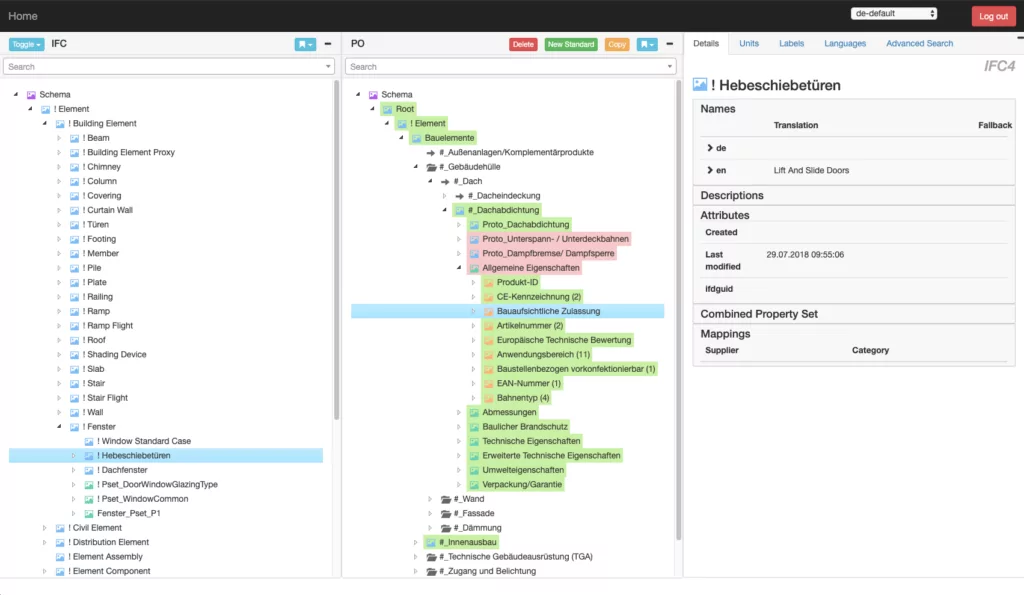
Structr use case
Plan.One
Plan.One is an online platform that enables architects and engineers to search, filter and compare relevant building products quickly and easily.
Plan.One aims to offer a comprehensive product portfolio that creates real transparency in the market.
The company already offers its customers a large and constantly growing portfolio of manufacturers and products, both global players and niche suppliers. These include well-known manufacturers such as Schüco, Knauf, Nelskamp, Lamilux, Roma, Teckentrup and Keuco. With Plan.One, architects and engineers can transfer relevant product details and planning information on these manufacturers' products directly into their own planning environment.
Key highlights
- Flexible, customer-specific meta schema management tool as development and runtime environment
- Digital marketplace for building products
- Metadata model based on IFC
- Products from customers such as Schüco, Knauf, Nelskamp, Lamilux, Roma, Teckentrup, Keuco
Key highlights
Provision of building products on a digital marketplace
Support for BIM data exchange formats such as IFC
Import of product data into customers' planning environments
BIM (Building Information Modeling / Management): BIM is used to digitally model, combine and capture all relevant building data.
IFC (Industry Foundation Classes, DIN EN ISO 16739): the primary global open standard for data exchange in the construction industry. It covers the logical building structures (e.g. window opening – wall – floor – building), their properties (attributes) and optional geometry.
Challenge
As a key part of digitalisation, Building Information Modeling (BIM) is currently revolutionising the entire construction industry.
A major accelerator of this change is that the format of the digital data exchanged between the parties involved has been defined by the open, platform-independent ISO standard DIN EN ISO 16739 Industry Foundation Classes (IFC).
IFC defines tree-like structures with a large number of product-specific attribute sets. Model View Definitions (MVD – subsets of the IFC data model) can reduce this complexity for project-specific data exchange requirements in BIM processes. Even so, to make building products comparable and reusable in the planning process – for example with regard to the IFC Design Transfer View – predefined IFC formats and categories have to be enriched with additional information, or product information provided by parties in the construction process has to be mapped onto existing structures.
Many existing CAD and/or BIM systems do offer functions for editing IFC data and structures, but they share limitations such as the following:
- They can only be used as part of closed, monolithic overall systems, tying customers to using all of that system's functionality.
- Their editing functions usually cannot be extended to meet customer-specific needs.
- They often add proprietary system information to the IFC formats used, which customers cannot process themselves and which makes data exchange with other parties harder.
- They do not allow free access to the underlying database structures of the system and are therefore closed, proprietary systems.
It quickly becomes clear that such monolithic, proprietary systems (“closed BIM”) cannot fulfil the promise of BIM that an open data exchange format makes every degree of freedom in processing IFC data available.
Read more
Instead, they turn out to be a decisive bottleneck for the flexible processing of IFC structures, preventing the development of platform services such as Plan.One, whose goal is to make a wide range of manufacturer information comparable on the basis of the IFC standard.
It is now clear that fixed editing options for product-specific modifications of IFC data are not enough to provide flexible import and export functions. What is needed is a solution that makes it possible to modify, enrich and combine categories and attribute sets individually – quickly, flexibly and sustainably.
One approach is to model not only the IFC structures but also the company-specific product- and process-dependent additions as connected graphs. This obvious approach is now considered particularly powerful and efficient for BIM (cf. TU Dresden 2017, TUM 2018).
Strategy
To enable this flexibility, Plan.One uses a graph database in which a complex metadata model based on IFC is mapped and maintained with a meta schema editor.
Using its own development and runtime environment, the experts at Structr GmbH created a flexible, customer-specific meta schema editor for this purpose. In an agile development process, this editor is continuously extended with additional functions, such as the integration of the customer's internal approval processes for new product categories or extensive search functionality.
The combination of a graph data model and a meta schema editor not only allows Plan.One to maintain the graph data model in a convenient web-based editor, but also to define product-specific integrity and consistency rules.
See the difference
Plan.One made the right decision from the start and built its business model on a database that offers maximum flexibility, room for growth and extensibility: a graph database. By choosing Structr, a strategic development and integration platform that makes it possible to harness the power of a graph database, the company also found the best possible solution.
A particular advantage of the collaboration between Plan.One and Structr GmbH was that the functionality of the meta schema editor was not only extended to meet Plan.One's requirements, but that these extensions could even be implemented at database level in an agile process (Scrum) without putting data integrity at risk during live operation.
Given that the IFC standard is currently being developed particularly intensively and quickly (IFC5 etc.), this approach secures the platform's future and makes it possible to respond to the needs of the market in a sustainable and agile way.
Together with Structr, we developed a tool that enables our employees outside of development to manage the areas of our database that are relevant to them on their own.
Solution
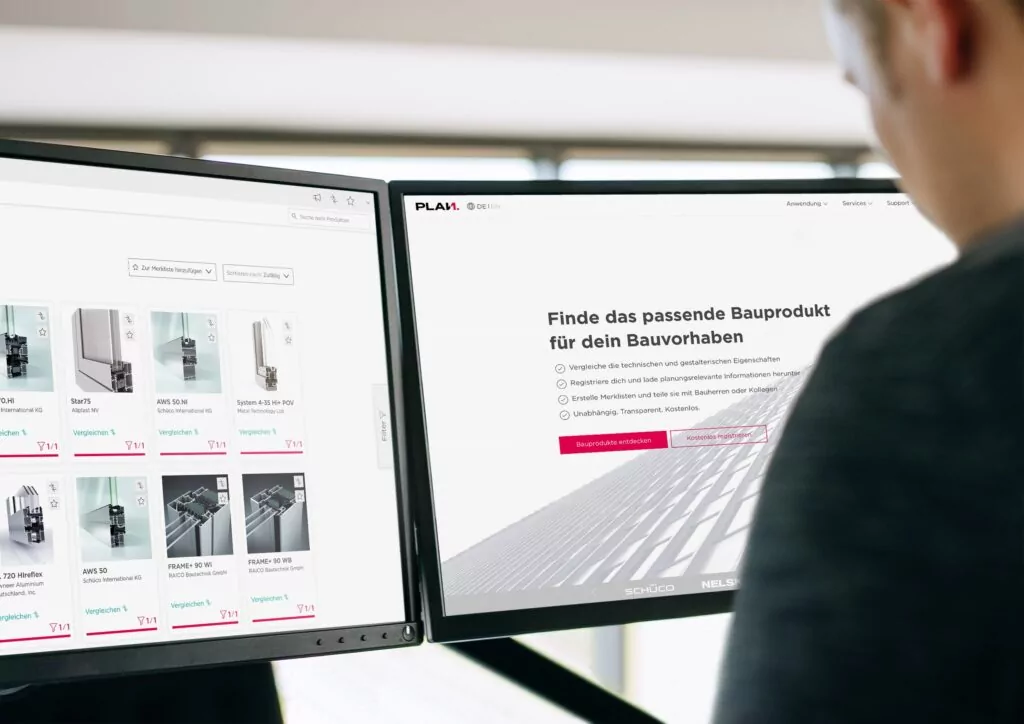
Plan.One offers a manufacturer-neutral, independent platform that brings manufacturers of building products (e.g. doors, windows, insulation materials) together with their consumers (e.g. architects, property developers) and, above all, enables consumers to search, filter and compare products according to their individual technical or design requirements.
BIM-based building products are made available on a single digital marketplace, both for import by the manufacturers and for transferring relevant product details and planning information directly into the planning environments of those looking for them. Data is exchanged via the open, vendor-independent IFC data exchange format.
The Plan.One solution is particularly remarkable because it allows all the building products it contains to be compared on the basis of their type-specific attributes across a wide range of product properties. Fire doors and roof windows, for example, share some characteristics such as dimensions or material. Beyond that, however, comparing them on component-specific properties such as fire protection class or thermal conductivity coefficient is also of interest.
- Maximum flexibility and clarity
- Support for industry standards
- A central place for maintaining and extending the meta schema
- Easy definition and extension of rules and relationships
- Real-time status queries across complex data structures
Would you like to learn more about how Structr was used in this solution?
Feel free to contact us at any time on +49 800 / 78 78 287 or send us an email at contact@structr.com. Alternatively, use our contact form.

Axel Morgner
Thank you for your message
We have received your request and will get back to you within one business day.
Urgent? Call us at +49 800 / 78 78 287.
Oops, something went wrong
Your message could not be sent. Please try again in a moment.
Still not working? Call us at +49 800 / 78 78 287 or write to contact@structr.com.